Snapdragon's 5GHz chip, YouTube's new money rules & a $499 AI toothbrush
Today: the first 5GHz phone chip lands at Snapdragon Summit, YouTube overhauls creator payouts, a Chrome shortcut that ends tab chaos, the overnight-charging myth busted, and Dyson's $499 AI toothbrush puts the 'AI in everything' era to the test.

- Long Press · Daily Five20 Sept 202601 / 05
 commentary
The world's first 5GHz phone chip is almost here
Qualcomm's Snapdragon Summit kicks off September 22, and the headline leak is a big one: what could be the world's first 5GHz smartphone chip. This year Qualcomm is splitting its flagship into two - the Snapdragon 8 Elite Gen 6 and a new Gen 6 Pro, both built on TSMC's 2nm process. The Xiaomi 18 is tipped to launch on it first, with the Galaxy S27, OnePlus 16 and iQOO 16 close behind. The date is official; the 5GHz figure is still a leak, so it's worth judging on real phones rather than keynote slides.
The problem
Every year 'faster chip' headlines pile up, but a peak spec on a slide rarely matches how a phone actually feels in your hand.
What changed
At Snapdragon Summit (Sept 22-24, Maui), Qualcomm is expected to reveal two flagship chips for the first time - the Snapdragon 8 Elite Gen 6 and a Gen 6 Pro on TSMC's 2nm process, with the Pro tipped to hit 5GHz, a smartphone first. The Xiaomi 18 is expected to ship on it first.
The catch
The Sept 22-24 dates are official, but the 5GHz clock speed and the dual-chip split are still leaks, not confirmed specs.
What it means for you
If you're eyeing a flagship this festive season, wait about two weeks: Snapdragon 8 Elite Gen 6 phones (Xiaomi 18, then Galaxy S27, OnePlus 16, iQOO 16) start landing by end-September.
- Long Press · Daily Five20 Sept 202602 / 05
 news
newsYouTube just rewired how creators get paid in 2026
YouTube has overhauled creator monetization for 2026. The Partner Program now splits into two tiers, so smaller channels unlock Super Thanks, Channel Memberships and Shopping earlier, while ad revenue still sits behind the classic 1,000-subscriber gate. Shorts now need 10 million qualified views every 90 days to keep earning ad and subscription revenue - miss it and payouts pause. Long-form keeps 55% of ad revenue, Shorts 45%. Discovery has also gone format-aware: Shorts mostly reach people who already watch Shorts, so if your audience prefers long-form, your Shorts may vanish from Search and Suggested. And AI or template-based videos on sensitive topics are no longer ad-eligible.
The problem
Creators are still told to 'do both Shorts and long-form,' but the payout rules and discovery mechanics quietly changed under them in 2026.
What changed
YouTube split the Partner Program into two tiers (perks like Super Thanks and Memberships unlock earlier), tied Shorts revenue to a rolling 10M-qualified-views/90-day bar, kept the 55/45 long-form/Shorts ad split, and made discovery format-aware so Shorts mainly reach Shorts-watchers.
The catch
The earlier perks still don't include ad revenue - that stays behind 1,000 subscribers - and missing the 10M-Shorts-views bar pauses Shorts payouts entirely.
What it means for you
Pick one primary format and stay consistent: the algorithm now rewards depth in a single lane over spreading thin across both, and AI/template videos on sensitive topics will lose ad eligibility.
- Long Press · Daily Five20 Sept 202603 / 05
 tip
tipThe Chrome address-bar trick most people miss
Chrome's address bar can search your own browser, not just the web. Type @ and you'll get shortcut buttons for @tabs, @bookmarks and @history - tap one, then type, to search just that place instantly without touching the mouse. Separately, type a site's name and press Tab, and Chrome lets you search inside that site directly, skipping its homepage. Together they turn the omnibox into a keyboard-only way to find that one open tab or bookmark you lost.
The problem
Hunting for one tab among 40, or digging through menus for an old bookmark or a page from last week, wastes more time than it should.
What changed
Chrome's omnibox has built-in shortcuts: type @tabs, @bookmarks or @history (then Space) to search each directly, and type a site name + Tab to search inside that site without loading its homepage first.
The catch
It's keyboard-first and easy to forget it exists - but once it's muscle memory, it replaces a lot of clicking.
What it means for you
Next time you're lost in tabs, hit the address bar, type @tabs and a keyword - the tab jumps straight to you. No extension needed.
- Long Press · Daily Five20 Sept 202604 / 05
 myth buster
No, charging overnight doesn't kill your battery
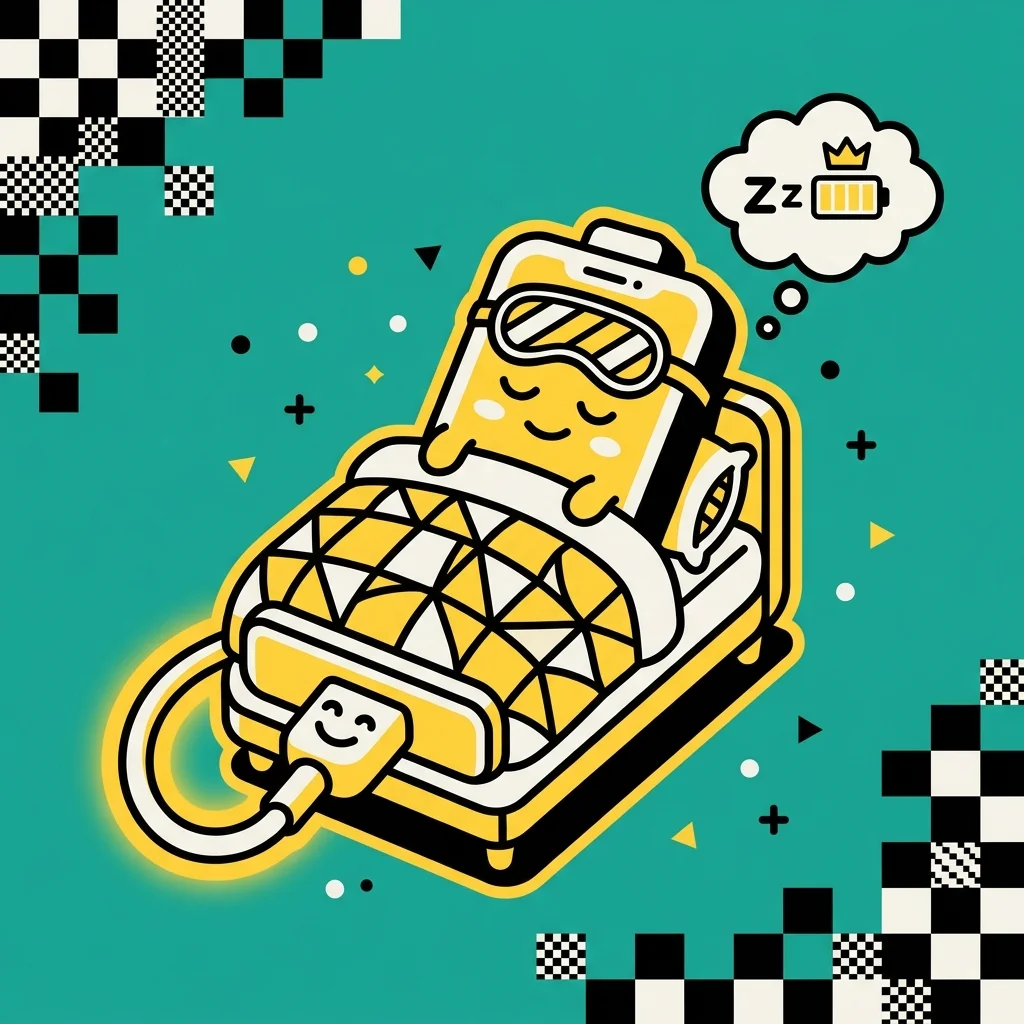
'Charging overnight kills your battery' is one of the stickiest tech myths going. In reality, modern phones stop pulling power once they hit 100%, and Optimized (or Adaptive) Charging deliberately holds the battery at around 80% overnight, topping up to full just before your usual wake time. The things that actually age a lithium battery are heat and repeatedly draining to 0%. So you can stop babysitting the charger: keep the phone cool, avoid running it flat, and turn on Optimized Charging.
The problem
People unplug obsessively, avoid 100%, and lose sleep over overnight charging - based on advice that no longer matches how modern phones manage power.
What changed
Modern phones stop drawing power at 100%, and Optimized/Adaptive Charging holds the battery near 80% overnight before topping up just before you wake - so overnight charging isn't the villain.
The catch
Batteries do still degrade - but the real accelerants are heat and repeated deep discharges to 0%, not the act of charging overnight.
What it means for you
Turn on Optimized/Adaptive Charging, keep the phone out of hot spots (no charging under a pillow), and avoid regularly hitting 0% - that's the whole battery-care checklist.
- Long Press · Daily Five20 Sept 202605 / 05
 hot take
Dyson made a $499 AI toothbrush. Really.
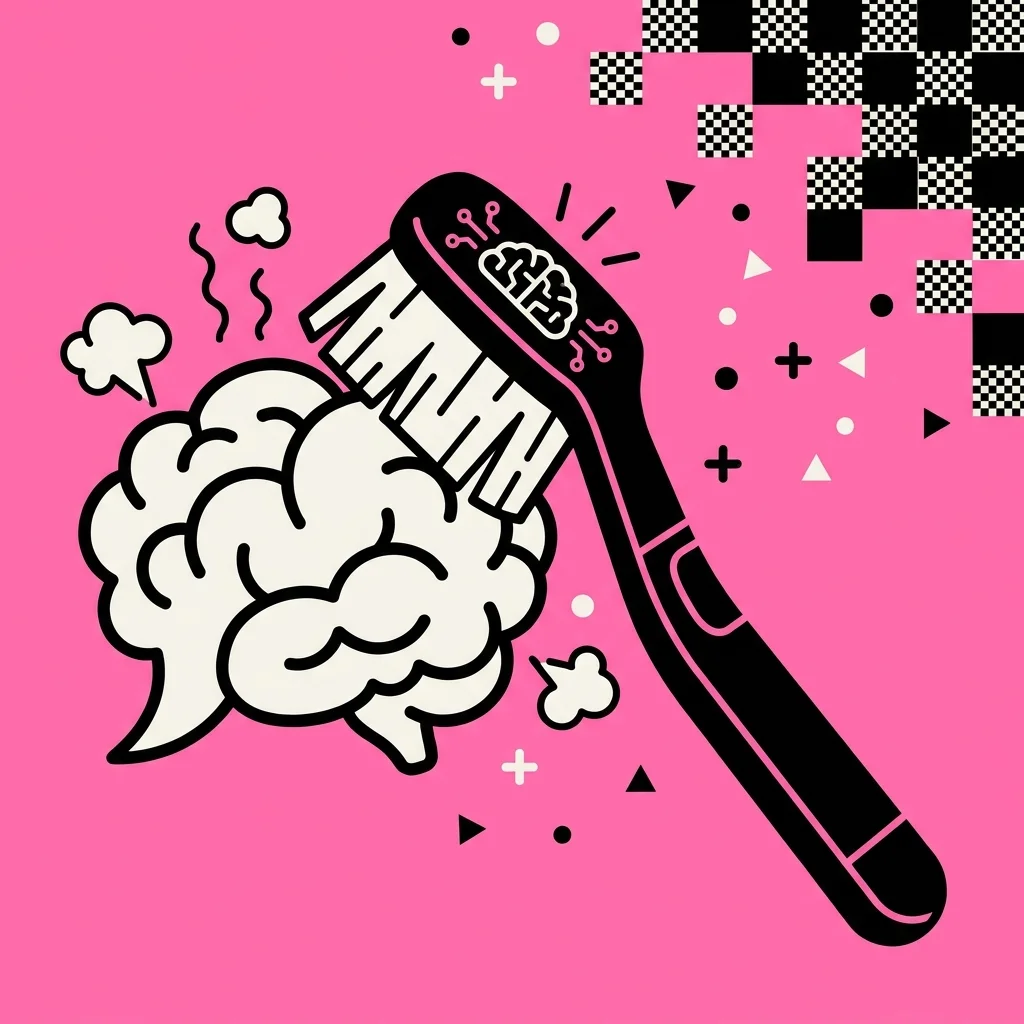
Dyson has launched a $499 AI toothbrush, the CameraJet. It has a 100,000-pixel macro camera that captures 28 images a second while you brush, machine learning that spots the gaps where plaque forms and fires a precision water jet at them, and - of course - its own toothpaste and mouthrinse. The engineering is genuinely impressive. The harder question is whether any of it belongs on a task a $3 brush already handles well. It's a near-perfect test of the 'AI in everything' era: clever, yes, but is it actually worth it?
The problem
'AI in everything' has reached the bathroom - and it's getting harder to tell genuine usefulness from AI added mainly to justify a premium price.
What changed
Dyson's $499 CameraJet packs a 100,000-pixel camera shooting 28 images/second, on-device machine learning trained on 470K dental images to detect plaque gaps, and a precision water jet - six years in development.
The catch
It's real engineering, but it's $499 (plus its own toothpaste and rinse) for a job a manual or basic electric brush does for a tiny fraction of that.
What it means for you
Before buying any 'AI' gadget, ask what the AI actually does that a cheaper tool can't - here, the honest answer for most people is 'not $499 worth.'